Advanced resin for dental 3D printing
G-PRINT v2: precision and stability for 3D-printed dental models
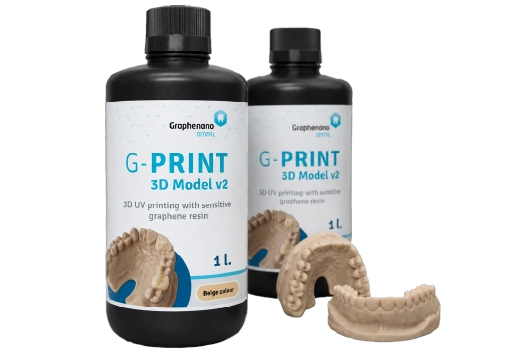
Graphene-doped resin developed for fabricating solid or hollow dental models with DLP technology, delivering smooth surfaces, high dimensional stability and precise reproduction of margins and contours.
For dental models · DLP 3D printing · 385–405 nm curing · 1-litre bottle · Graphene-doped formulation
Advantages
Why choose G-PRINT?
Three qualities define the material — detail precision, dimensional stability and reproducibility — and translate into a more controlled laboratory workflow.
Detail precision
Clear reproduction of margins, contours and grooves, with smooth, pore-free surfaces that make the model easy to read with confidence.
Dimensional stability
The model keeps its geometry during processing and storage: a reliable physical base for every case.
Reproducibility
Low sedimentation, easy mixing and stable behaviour: the same file produces the same model, print after print.
Precision
- Clear reproduction of margins and contours
- Smooth, pore-free surfaces
- A suitable base for high-precision restorations
- Details are easy to read visually
Stability
- High dimensional stability
- Physical stability during storage and processing
- Low sedimentation and easy mixing
- Consistent results
Handling
- Handling comparable to a stone model
- Easy to clean and moisture-resistant
- Can be isolated against adhering wax
- Convenient laboratory processing
Productivity
- Parameters developed to optimise the process
- Reproducible manufacturing in digital workflows
- Solid or hollow models as needed
- Applicable to different laboratory processes
Precision you can see
Every margin matters
Finish lines, contours, grooves and fit between components: reading the detail is the foundation of a precise restoration.
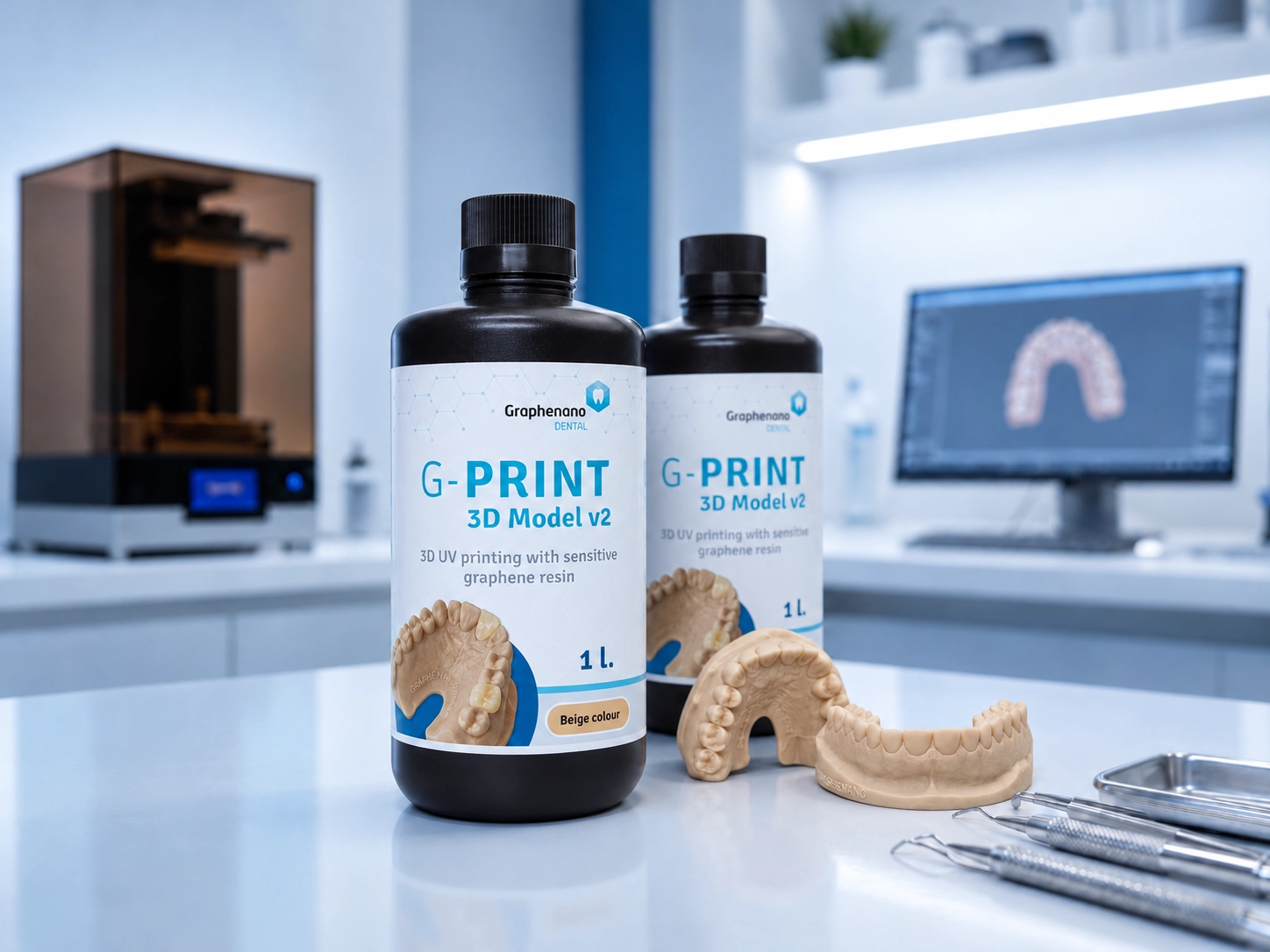
Finish lines are clearly visible on the model surface, the basis for assessing the preparation and checking the fit of the restoration.
Smooth, pore-free surfaces that make details easy to read and simplify subsequent work: duplication, thermoforming or waxing on the model.
Contours, grooves and abutments consistently reproduced from the digital file, with removable dies that keep their seating.
High dimensional stability during processing and storage: the model keeps its geometry throughout the work.
The final precision of the model depends on the whole workflow.
Workflow
From digital design to finished model
Seven steps. A stable, documented process, from file to final check.
01
Design
02
Compatible 3D printer and G-PRINT resin calibration
03
Slice the model
04
Materials needed for printing
05
Model printing
06
Cleaning
07
Post-curing
Compatibility
Is it compatible with my printer?
G-PRINT is developed for DLP 3D printers curing between 385 and 405 nm. Our technical team will confirm the profile status and recommended parameters.
Compatibility and calibration
G-PRINT is designed to be calibrated on open-system 3D printers. Since print parameters can vary depending on the printer model and its technical specifications, Graphenano Dental provides a calibration file and a technical protocol that let users fine-tune the resin and determine the right print parameters for their equipment.
Technical parameters
Material data
Reference values for G-PRINT 3D Model.
HARDNESS
87 Shore D
VISCOSITY (25 °C)
200 cPs
WAVELENGTH
385–405 nm
LIQUID DENSITY
1.1 g/cm³
ELASTIC MODULUS
2,780 MPa
FLEXURAL STRENGTH AT 5 %
87 MPa
EXPOSURE
1.4–6 s
SHELF LIFE
12 months
SHRINKAGE
< 1%
Comparison
G-PRINT vs the conventional stone model
Dental stone is still a valid material. The printed model offers advantages when the laboratory workflow is digital.
| Criterion | Dental stone | G-PRINT model |
|---|---|---|
| Origin | Physical impression with alginate or silicone | Scanned or designed digital file |
| Repeatability | Each pour is unique | The same file can be printed as many times as needed |
| Storage | Physical: space, breakage and wear | Digital: the model is archived and reprinted |
| Duplication | Requires a new pour or duplicate | Direct reprint from the file |
| Moisture | Sensitive to water and abrasion | Moisture-resistant and easy to clean |
| Hollow models | Not applicable | Hollow construction to save material |
| Production | Manual process per case | On-demand production in print batches |
| Digital workflow | Analogue intermediate step | Integrated end-to-end into CAD/CAM |
Final performance depends on the whole workflow: scanning, design, slicing, printer, calibration, processing and post-curing.
Production ecosystem
From model to final application
The G-PRINT model is one part of a larger process. Choose a type of work to see where it fits in.
- Scanning
Intraoral capture or scan of a conventional impression. - Model design
CAD design of the working model, with dies if required. - Printing with G-PRINT G-PRINT
Solid or hollow model on a DLP printer. - Restoration fabrication
Milling or laboratory technique on the model. - Fit check
Verification of margins and contacts on the model.
The G-PRINT model serves as the physical reference for work and verification while the restoration is fabricated.
- Planning
Movement sequence and digital set-up. - Model printing G-PRINT
One G-PRINT model per treatment stage. - Thermoforming
The aligner is thermoformed on the printed model. - Trimming and finishing
Trimming, polishing and checking the resulting tray.
G-PRINT prints the model on which the aligner is thermoformed; the aligner itself is not made from the resin.
- Design
Digital design of the working model. - Model printing G-PRINT
Solid or hollow G-PRINT model. - Thermoforming
The splint is formed on the model. - Fitting
Adjustment and final finishing of the device.
As with aligners: the printed model is the base for thermoforming, not the final device.
Yield calculator
How many models can you get from 1 litre?
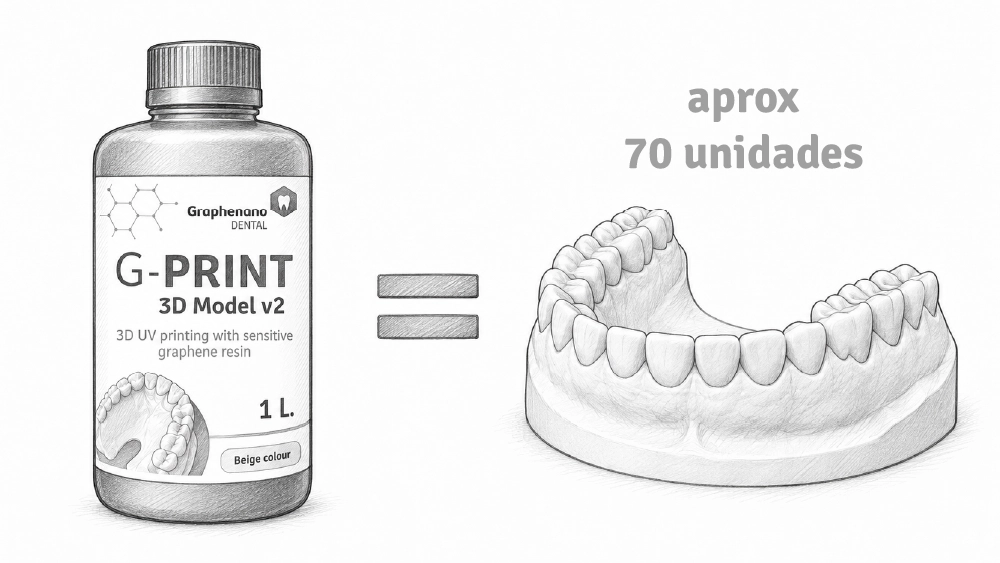
Indicative yield estimate for a 1-litre bottle depending on your type of production (includes standard supports and 10 % waste).
- Solid full arch (~18 cm³): ≈ 22 mL per model → ≈ 45 models per litre
- Hollow full arch: ≈ 10 mL per model → ≈ 100 models per litre
- Partial / quadrant model (~10 cm³): ≈ 12 mL per model → ≈ 80 models per litre
Indicative estimate. Actual consumption depends on the design, supports, printer and print settings.
Estimate per 1 L bottle
≈ 22 mL
approx. consumption per solid arch
≈ 45–100
estimated models per litre (solid–hollow)
The cost per model will be shown once the current bottle price is confirmed.
Packaging and purchase
G-PRINT 3D Model v2
€165 Available now
- Product: G-PRINT 3D Model — resin for dental models
- Packaging: 1-litre bottle
- Colour: beige.
- Technology: DLP 3D printing
- Application: solid and hollow dental models
- Taxes: VAT not included, depending on market
Shipping and availability vary by market. Check terms with your distributor.
Evidence and trust
A brand backed by evidence, not promises
G-PRINT is developed by Graphenano Dental, part of the Graphenano Group, with in-house industrial-scale production of certified graphene and manufacturing in Spain.
Developed by Graphenano Dental
Specialists in advanced graphene dental materials, part of the Graphenano Group.
Proprietary certified graphene
The only company that integrates its own industrially produced graphene into dental materials.
Mechanical property testing
Hardness, elastic modulus and flexural strength characterised in the laboratory.
Assessed dimensional stability
Model behaviour verified during processing and storage.
Quality control and traceability
Controlled manufacturing with batch information on every bottle.
Made in Spain
Local R&D, production and technical support, from Yecla and Paterna (Spain).
Graphenano Dental ecosystem
Related products
Each product has a specific place in the G-CAM restoration workflow.
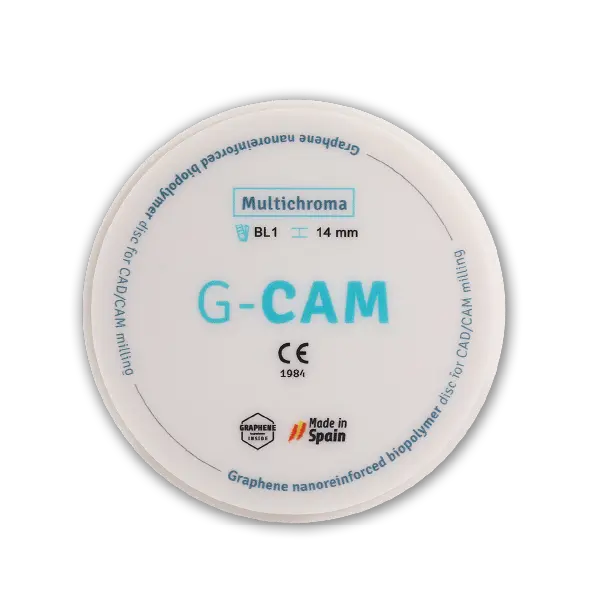
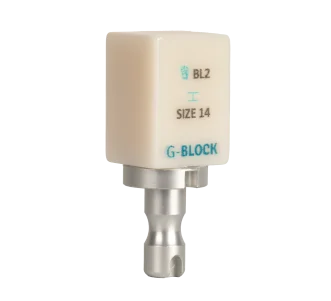
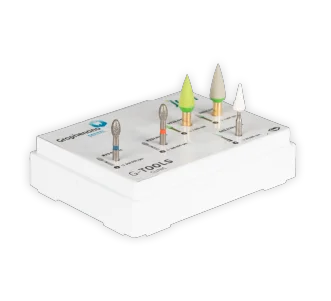
Polishing kit · Laboratory
G-TOOLS Clinic
G-CAM polishing kit for an optimal finish in the clinic.
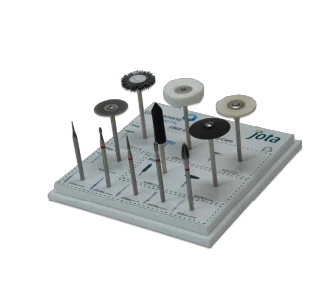
Polishing kit · Laboratory
G-TOOLS
G-CAM polishing kit for an optimal finish in the laboratory.
Frequently asked questions
Answers to your questions
For printing dental models: full, partial, solid, hollow, with removable dies, and models intended for duplication or thermoforming.
Yes. The resin is formulated for both; the choice depends on how the model will be used and the desired material consumption.
No. G-PRINT prints the model on which the splint or aligner is then thermoformed. It is not a resin for intraoral devices.
It is developed for DLP 3D printers. The list of verified printers and available profiles is published on this page; if your printer isn’t listed, contact support.
Answer pending validation against official documentation
Available sources mention a curing range of 385 to 405 nm; exact compatibility by wavelength is pending confirmation against the current technical data sheet.
Answer pending validation against official documentation
Available sources indicate curing at 405 nm within the stated range; confirm with the current technical data sheet and your printer profile.
Answer pending validation against official documentation
In the resource centre on this page, alongside the technical data sheet and the processing guide.
Yes, we recommend calibrating G-PRINT on each printer before production, especially on printers without a validated profile.
The resin has low sedimentation and is easy to mix. The exact procedure and times are detailed in the instructions for use.
Answer pending validation against official documentation
Using the cleaning process described in the processing guide. Specific products and times are pending validation against the official protocol.
Answer pending validation against official documentation
Post-curing is done in a UV curing unit according to the processing guide. Specific equipment and parameters are pending validation.
Answer pending validation against official documentation
Post-curing times depend on the equipment and are specified in the official documentation. Pending validation.
Answer pending validation against official documentation
Protected from light and under the conditions stated in the technical data sheet. Specific conditions are pending validation.
Answer pending validation against official documentation
The stated shelf life is 12 months. Shelf life once opened is pending confirmation.
Uncured resin must be handled according to the safety data sheet and local waste regulations. Refer to the product SDS.
Answer pending validation against official documentation
Reusing resin from the vat depends on the official handling protocol. Pending validation.
Answer pending validation against official documentation
Request a print profile via the support form: our technical team will assess your printer and give you starting parameters.
From the Graphenano Dental online store or through the distributor network, depending on your market.
Yes. Use the “Find a distributor” link or contact the sales team to find the distributor in your area.
Yes: calibration, parameters, processing workflow review, troubleshooting and training for laboratories and clinics.