

Advanced material for CAD/CAM milling
G-CAM: graphene nano-reinforced biopolymer for dental restorations
A metal-free solution developed for the digital fabrication of prostheses and restorations with high mechanical, biological and aesthetic performance.
CAD/CAM technologyDeveloped with grapheneFor permanent prostheses
What is G-CAM
Biopolymer base. Performance in a class of its own.
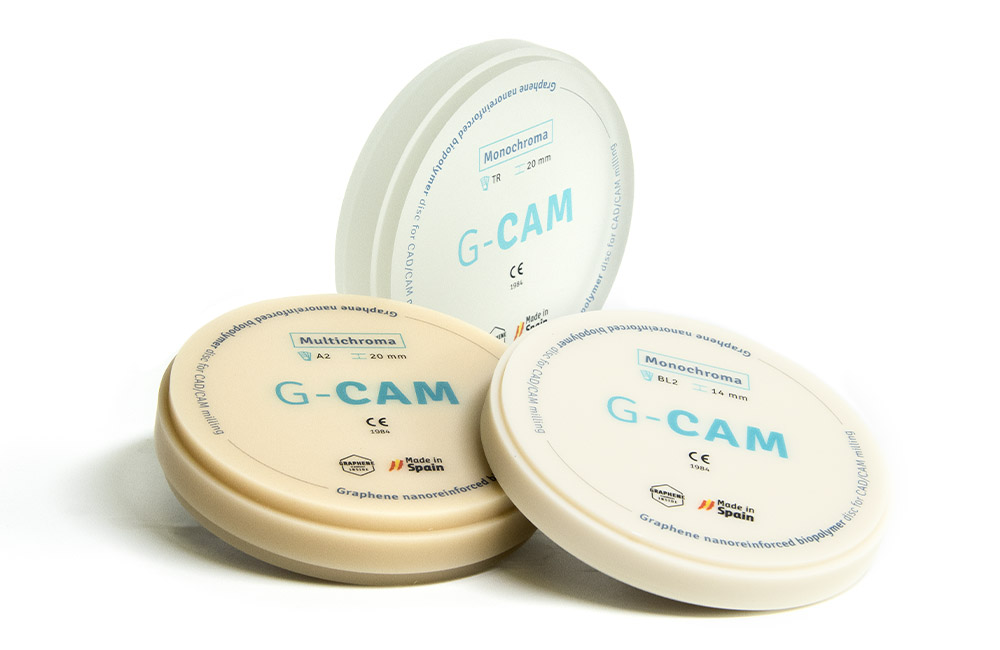
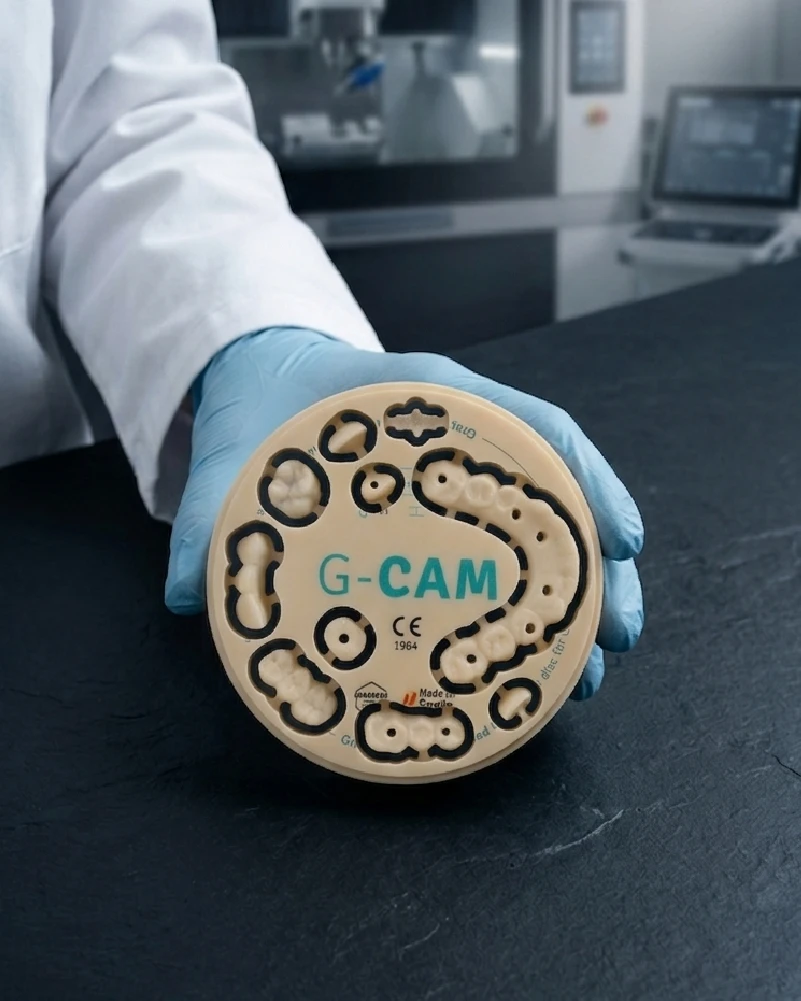
G-CAM is a biopolymer disc nano-reinforced with medical-grade graphene, developed by Graphenano Dental for fabricating restorations using CAD/CAM technology. Graphene reinforcement overcomes the mechanical, physicochemical and biological shortcomings of conventional acrylic, in a material indicated for permanent dental structures.
Mechanical reinforcement
Graphene is integrated into the polymer matrix, increasing flexural and fracture strength without adding weight.
Physicochemical stability
Low liquid absorption and long-term thermal and dimensional stability.
Biological behaviour
Bacteriostatic material with low residual monomer content and high tissue compatibility.
Value proposition
Why choose G-CAM?
Three dimensions that define the material: mechanics, biology and aesthetics.
Mechanical and physical / chemical performance
- High flexural strength
- Balance between hardness and flexibility
- Distribution of masticatory loads
- Low liquid absorption
- Dimensional stability
Biocompatibility and comfort
- Metal-free material
- Low residual monomer content
- Lightweight
- Tissue compatibility
- Greater patient comfort
Aesthetics
- Natural appearance and colour stability
- G-CAM shade guide colorimetry
- Monochroma and Multichroma versions
- Characterisation with light-curing materials
Clinical applications
Designed to support every restorative solution
Indicated for permanent and temporary restorations, from single crowns to full-arch rehabilitation.

Single crowns
Bridges

Full dentures
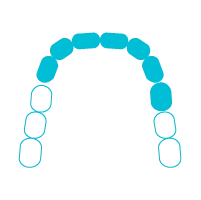
Partial dentures

Inlays

Veneers

Implant-supported prostheses
Technical data
Properties that speak for themselves
Values from Graphenano Dental’s technical documentation for the G-CAM material.
3200 MPa
Elastic modulus
± 7 %
>140 MPa
Flexural strength
± 7 %
88 Shore
Surface hardness
Shore D scale
4 μg/mm³
Water absorption
Low liquid uptake
<0,004 %
Residual monomer
Well below conventional PMMA
Digital workflow
A seamless digital workflow, from scanning to final finishing
G-CAM is milled directly and goes straight to finishing with no intermediate thermal processes: fewer steps, less lab time and a simpler CAD/CAM workflow.
Reduce your working time and be more efficient every day
01
Scanning
Intraoral or model digital impression.
02
CAD design
Use the G-CAM design parameters.
03
Milling
Direct, dry or wet.
04
Removal and adjustment
Separation from the disc and adjustment of the structure.
05
Characterisation, polishing and finishing
Direct finishing using the G-TOOLS laboratory kit or light-curing materials.
06
Clinical placement
Easy handling, fitting and cementation.
Formats, dimensions and shades
A disc for every case
Format
Monochroma — single-shade disc designed to reproduce the shade of dentine.
Multichroma — disc with a shade gradient based on natural tooth colour, reproducing the optical effects of the natural dentition.
Diameter
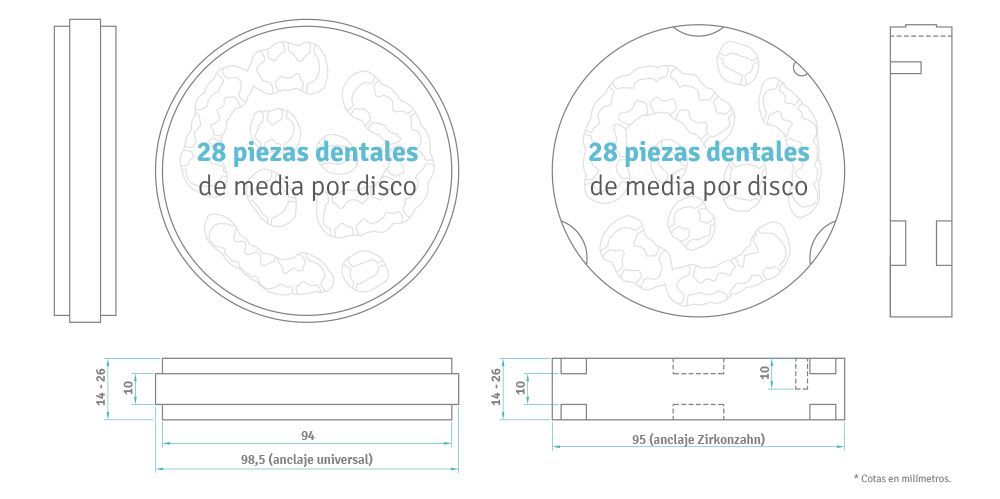
- - 98.5 mm mount (universal) — 98.5 mm diameter disc.
Thicknesses: 14, 16, 18, 20, 22, 24, 26, 30 mm. - - 95 mm mount — 95 mm diameter disc.
Thicknesses: 14, 16, 20 and 24 mm.
Thickness
Availability may vary by diameter, format and shade.
14 · 16 · 18 · 20 · 22 · 24 · 26 mm
Shades
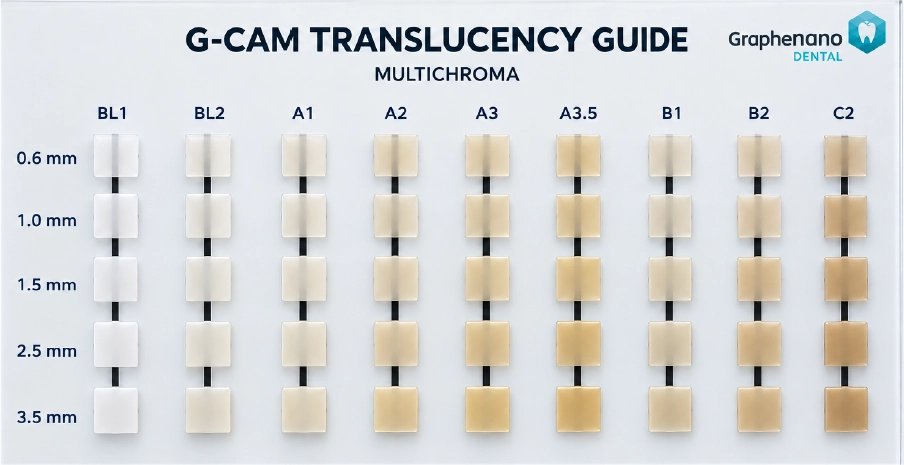
The discs are available in shades BL2, A1, A2, A3, A3.5, B2, C2 and Transpa, approximating the VITA guide.
Expandable in the laboratory with light-curing surface stains.
For final selection, refer to the G-CAM Shade Guide.
Two versions
Monochroma or Multichroma?
The choice depends on how your laboratory handles aesthetic finishing.
Monochroma
A single pure shade throughout the disc
- Uniform base, ideal for work that will be characterised
- Maximum laboratory versatility
- Full control of the result through surface stains
Choose it if your workflow includes customised characterisation or layering.
Multichroma
Translucency adapted to thickness
- Shade range based on natural tooth colours
- More natural result straight from milling
- Greater depth and translucency
Choose it if you want natural aesthetics with minimal finishing work.
Material comparison
How G-CAM compares with other solutions
Indicative comparison by general material category. Each clinical case must be assessed individually.
| Criterion | G-CAM | Conv. PMMA | Ceramic | Zirconia | Metal-ceramic |
|---|---|---|---|---|---|
| Weight | Low | Low | Medium | High | High |
| Elasticity / load absorption | High | Medium | Low | Low | Low |
| Fabrication process | Direct milling | Direct milling | Milling + crystallisation | Milling + sintering | Metal + ceramic processing |
| Sintering / furnace required | No | No | Yes | Yes | Yes |
| Processing time | Reduced | Reduced | Medium | High | High |
| Repairability | High | High | Limited | Limited | Limited |
| Aesthetics | High | Medium | Very high | Very high | Medium |
| Patient comfort | High | Medium | Medium | Medium | Low |
| Permanent indication | Yes | Temporary | Yes | Yes | Yes |
Evidence and trust
A brand backed by evidence
G-CAM is developed and manufactured in Spain by Graphenano Dental, part of the Graphenano Group, using its own certified graphene and industrial-scale production.
- Cytotoxicity — ISO 10993-5. Biocompatibility tests performed at the University of Alcalá.
- Bacterial reverse mutation — ISO 10993-3 · OECD 471. Tests performed at IVAMI.
- Ultrasonic quality control. Every disc is verified with the Graphenano Ultrasonic Tester.
- CE 1984 marking · Made in Spain. Testing of mechanical properties and thermal and dimensional stability.
- Innovative SME. Recognised by the Spanish Ministry of Science and Innovation.
Technical documentation
Clinical cases
Real restorations with G-CAM
Rehabilitation
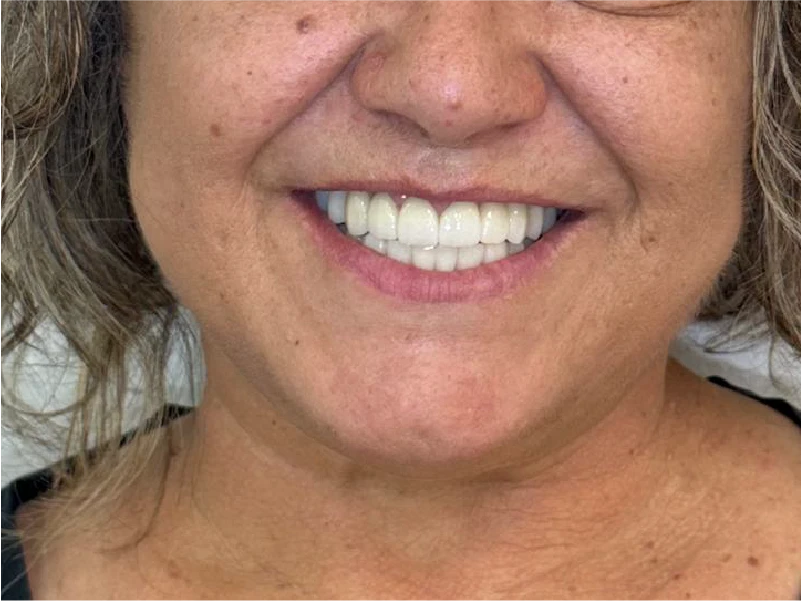
Lower bridge on natural teeth. Upper monobloc bridge on implants.
A G-CAM bridge was placed on natural teeth in the lower arch, together with an implant-supported Monoblock G-CAM bridge in the upper sector 15-15-17.
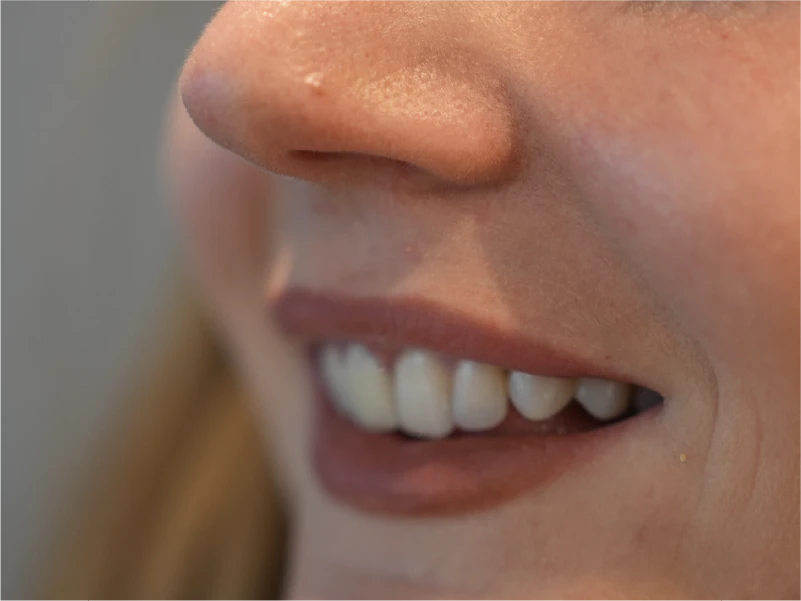
implant-supported rehabilitation
G-CAM after 3.5 years in the mouth
Follow-up of a G-CAM treatment with implant-supported bridges at 14-15-16 and 24-25-26 and an implant crown at 36
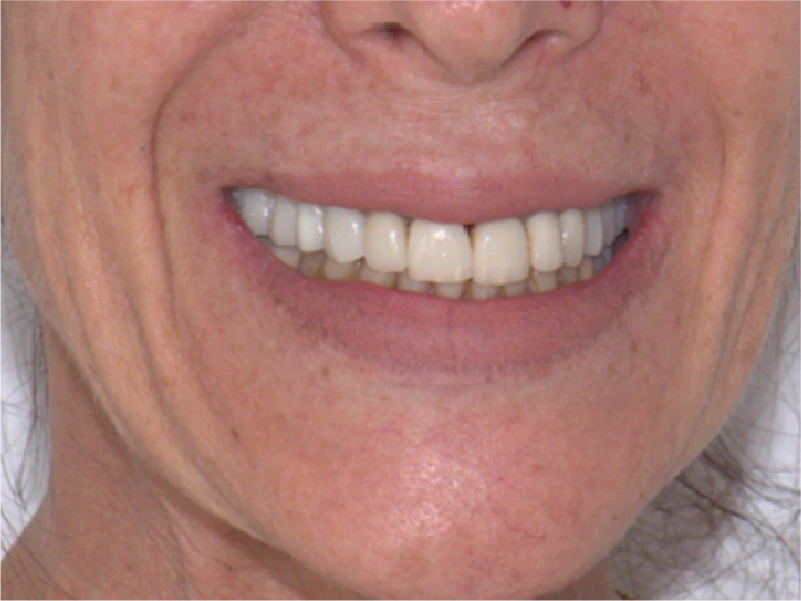
restoration follow-up
Implant-supported bridges and crowns
This clinical follow-up shows the evolution of a G-CAM restoration on tooth 21 after 3.5 years in the mouth.
Professional training and support
We don't just sell a disc. We support your workflow.
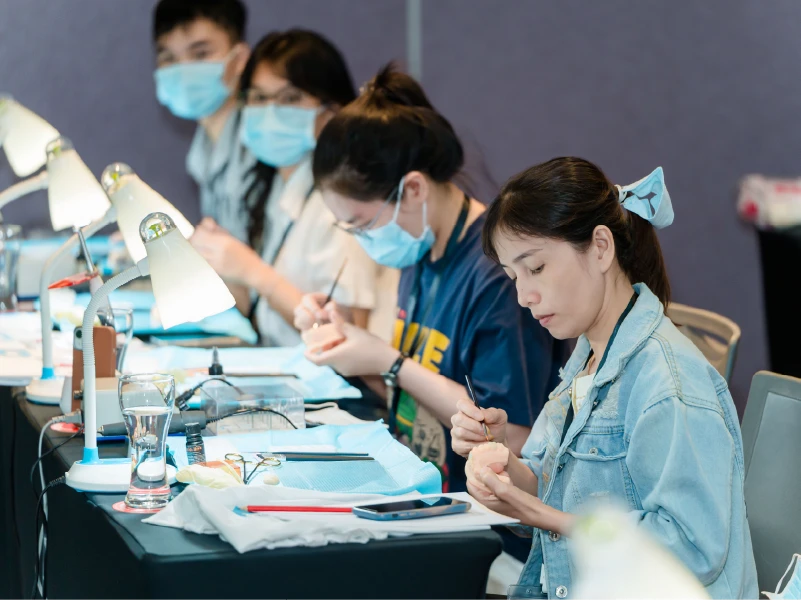
Certified training and direct technical support for clinics and laboratories, delivered by the Graphenano Dental team.
- Milling best practices and standardised work protocols
- Characterisation and polishing with G-TOOLS kits
- Design review and CAD/CAM consulting
- Technical support for clinics and laboratories
- Professional certification and access to the Smile Forever programme
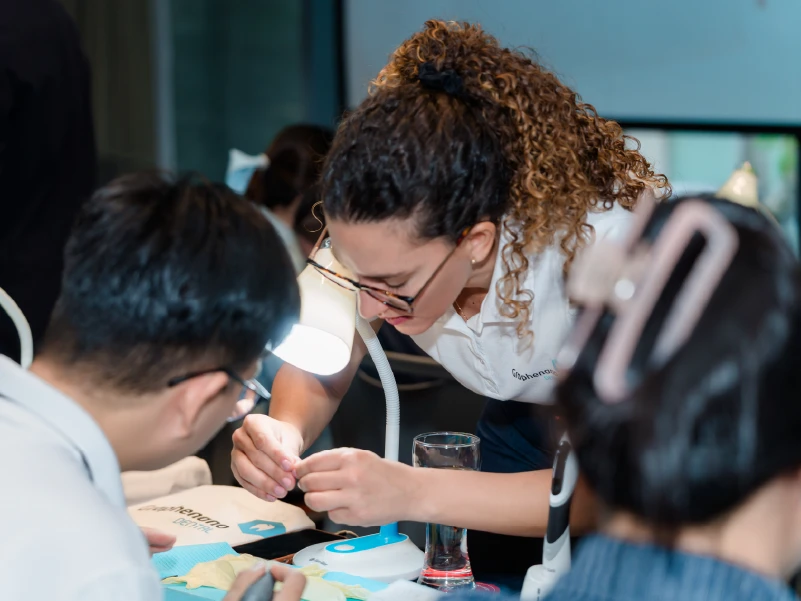
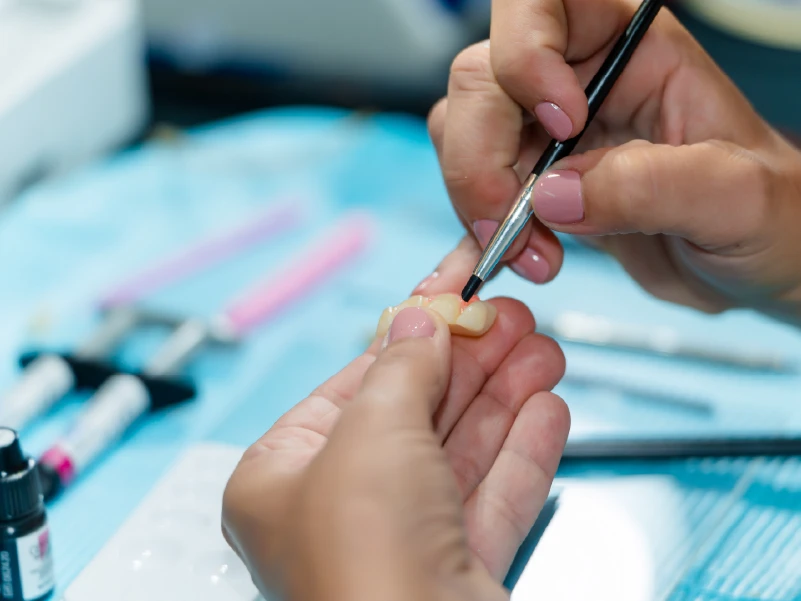
Graphenano Dental ecosystem
Everything around G-CAM
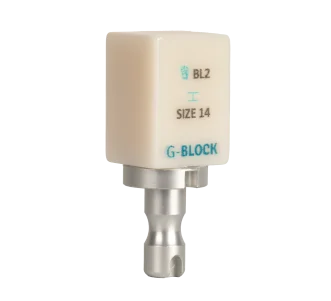
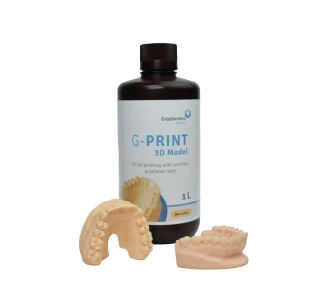
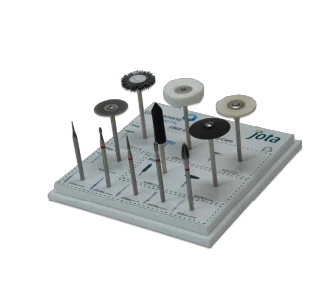
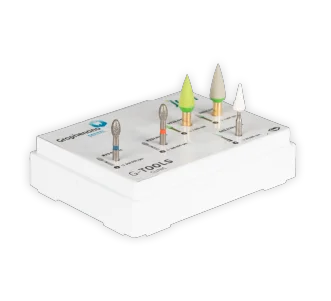
Polishing kit · Laboratory
G-TOOLS
G-CAM polishing kit for an optimal finish in the laboratory.
Polishing kit · Clinic
G-TOOLS Clinic
Safe chairside adjustment and polishing after cementation.
Frequently asked questions
Answers to your questions about G-CAM
Single crowns, anterior and posterior bridges, implant-supported prostheses, full or partial dentures, veneers and full-arch rehabilitations, for both permanent and temporary restorations.
Yes. G-CAM is specifically indicated for permanent dental structures, a category reserved for very few polymers, and holds CE 1984 marking. See the certifications section for regulatory details.
Monochroma: single-shade disc designed to reproduce the shade of dentine.
Multichroma: disc with a shade gradient based on natural tooth colour, reproducing the optical effects of the natural dentition.
The 98.5 mm disc features a universal mount, compatible with most open CAD/CAM systems.
The 95 mm disc is designed for Zirkonzahn systems.
Confirm your milling machine’s compatibility with our technical team.
98.5 mm mount (Universal): 98.5 mm diameter disc. Thicknesses: 14, 16, 18, 20, 22, 24, 26, 30 mm.
95 mm mount: 95 mm diameter disc. Thicknesses: 14, 16, 20 and 24 mm.
Availability may vary by format and shade.
The shade range can be expanded with light-curing materials in the laboratory. For polishing, Graphenano Dental offers the G-TOOLS Laboratory and G-TOOLS Clinic kits, designed specifically for the material.
An official cementation protocol is available in the technical documentation section. We recommend following it strictly and contacting technical support with any questions.
⚠ Answer pending validation by the technical team.
The recommended CAD design parameters are available in the downloadable technical documentation and are covered in detail in the certified training.
⚠ Answer pending validation by the technical team.
Yes. Graphenano Dental offers certified training on milling, work protocols, characterisation and polishing, both online and in person at our facilities in Paterna (Valencia, Spain).
G-CAM can be purchased directly from the online store or through our official distributors, by shade, format and thickness. You can also request a sample or a custom quote via the contact form or from our distributors.
Bring graphene into your CAD/CAM workflow
Discover an advanced solution for fabricating strong, lightweight, aesthetic restorations tailored to the needs of digital dentistry.